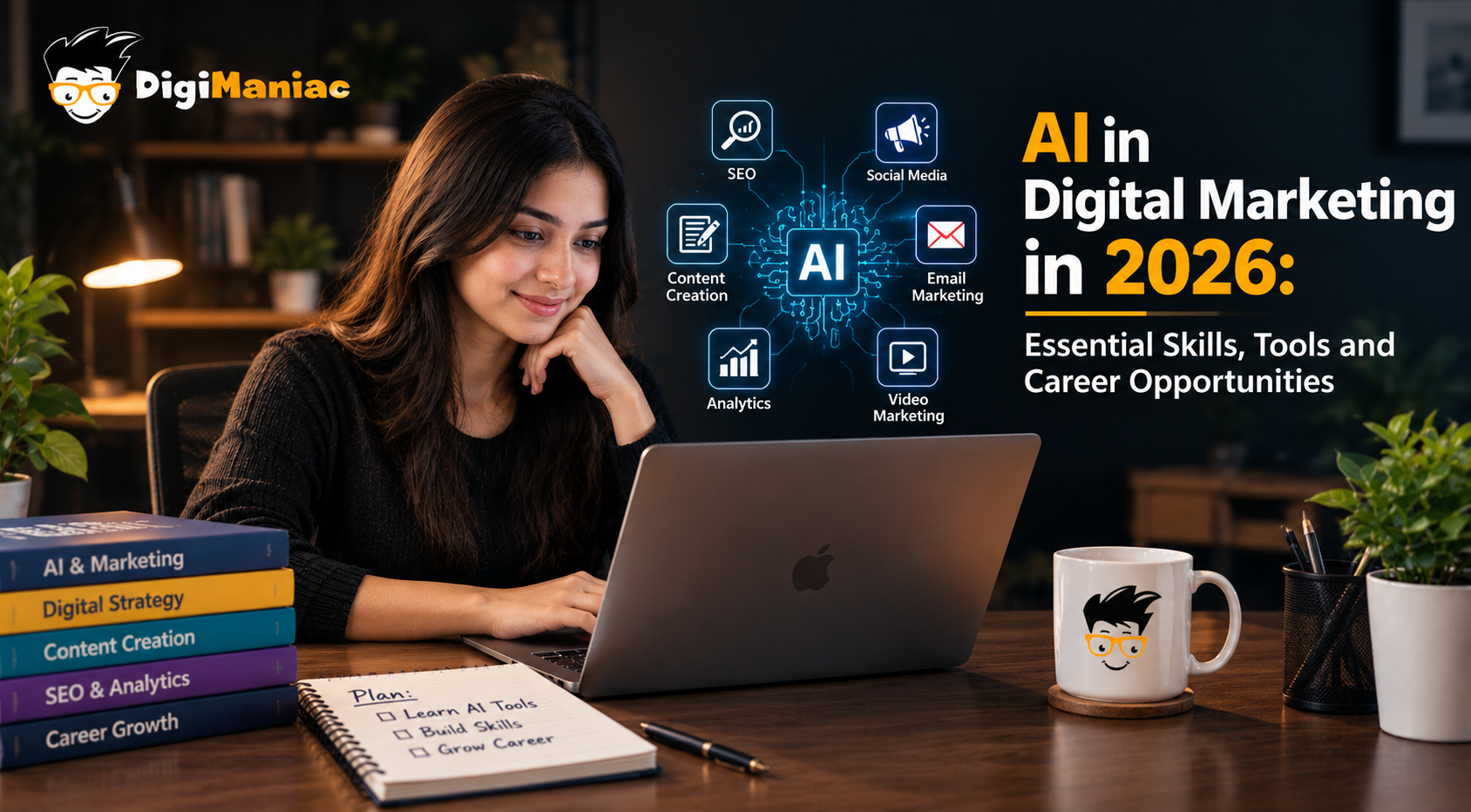
AI in Digital Marketing in 2026: Essential Skills, Tools and Career Opportunities
Artificial Intelligence (AI) has been integrated into various digital marketing functions, ranging from research and content creation to advertising and customer analytics. Businesses are also leveraging AI to better understand their audience and improve the overall customer experience. For students and professionals, learning how to use AI can open up a variety of digital marketing career opportunities. There is no need to pursue an advanced degree or learn coding – a basic understanding of digital marketing principles, including SEO, content marketing, social media, ads, and analytics, will enable one to use AI effectively in the field. However, AI is not a magical solution that can instantly boost a marketing campaign’s performance. While it can provide recommendations, insights, and automation, human expertise is needed to execute marketing strategies and ensure accuracy and precision. This article covers everything about using AI in digital marketing, including its tools, skills, and jobs. What Is AI in Digital Marketing? AI in digital marketing refers to the use of artificial intelligence tools, algorithms, and technologies to support and enhance marketing initiatives and decision-making. In other words, it is a combination of computer programs that can carry out marketing tasks and activities more efficiently and effectively. From generating blog post outlines to optimizing Google Ads and analyzing customer behavior, AI can support nearly all digital marketing activities. Some common applications of AI in digital marketing in 2026 include: • Content creation and research • Search Engine Optimization (SEO) • Advertising management • Email marketing • Chatbots • Customer segmentation and analytics • Marketing automation • Website traffic and conversion rate optimization AI uses different computer technologies, including deep learning, machine learning, natural language programming, and generative AI models. Marketers and business owners should understand that AI cannot replace the human element in digital marketing. While it can carry out specific tasks, it is essential to remember that AI-generated information and recommendations should always be cross-checked and verified for accuracy, relevance, and authenticity. Why Is AI Important in Digital Marketing in 2026? Digital marketing is a broad term that covers a wide range of marketing activities and platforms. It typically involves carrying out extensive market research, engaging with diverse audiences through multiple channels, and managing various advertising and marketing initiatives. AI makes it possible to carry out these activities with minimal effort and time. For instance, Google Ads and Google Analytics are using AI to help marketers gain valuable insights and optimize their campaigns. Below are some reasons why AI is crucial in digital marketing in 2026. 1. Faster Research and Planning Marketers often need to carry out extensive research and planning before launching a new marketing campaign, writing a blog post, or creating new ad sets. AI can assist in speeding up this process by suggesting relevant ideas, compiling research reports, and developing a realistic action plan. For instance, a content marketer may want to write a blog post targeting the keywords “digital marketing courses in Panipat.” An AI tool can help suggest relevant questions to address in the post, such as “What are the best digital marketing courses in Panipat for beginners?” and “How much do digital marketing courses in Panipat cost?” 2. Better Customer Insights With the help of AI analytics tools, marketers can gather and organize customer insights to inform their marketing and advertising campaigns. For instance, they can identify which web pages attract the most traffic, which marketing channels drive high-quality leads, and where website visitors tend to leave before purchasing. 3. Enhanced Customer Experience Most customers are more likely to purchase from a business that understands their preferences and purchasing tendencies. AI can help marketers segment their target audience based on their interests, gender, age, and other factors. They can then develop marketing and advertising campaigns that appeal directly to them, such as sending targeted emails and recommending relevant products. 4. Reduced Manual Efforts Many digital marketing activities are repetitive, tedious, and time-consuming. Marketers can use AI tools to automate such tasks, including scheduling social media posts, sorting customer inquiries, and generating reports. This way, they can focus on more important aspects of their campaigns, such as creating engaging content and optimizing their ads. 5. Faster Insights and Analysis Rather than manually analyzing campaign data, marketers can use AI to identify irregularities and patterns within seconds. They can then use this information to optimize their campaigns and improve their performance. How Does AI Work in Digital Marketing? AI works differently in various digital marketing activities and use cases. In general, however, it carries out the following steps: 1. Data Gathering Marketing and advertising platforms generate vast amounts of data, including customer insights, preferences, behaviors, and search history, subject to privacy and consent policies. 2. Pattern Recognition AI algorithms analyze this information to identify patterns and irregularities. For instance, an advertising platform can recognize what signals and audiences tend to lead to conversions. 3. Recommendations or Automation Depending on the use case, AI can suggest recommendations or make adjustments automatically. For instance, it can recommend relevant blog post headlines, optimize ad bids, or implement adjustments to improve the performance of a particular social media post. 4. Evaluation Marketers can analyze the results of a particular marketing activity or initiative and use it to optimize future campaigns. For instance, they may want to tweak a website’s landing page to encourage more visitors to purchase a product or service. 5. Refinement Refinement refers to the process of fine-tuning a particular campaign, strategy, or initiative based on the evaluation results. For instance, when optimizing a landing page, the marketer may want to A/B test it to determine which version performs better. It is important to note that AI automation is not always involved in these steps. Some digital marketing tools only provide recommendations before a marketer implements the suggested changes. How Is AI Used in Various Digital Marketing Activities? I can be used in nearly all digital marketing activities and channels. It is crucial to combine it with one’s marketing expertise and understand how it
AI in Digital Marketing in 2026: Essential Skills, Tools and Career Opportunities Read More »