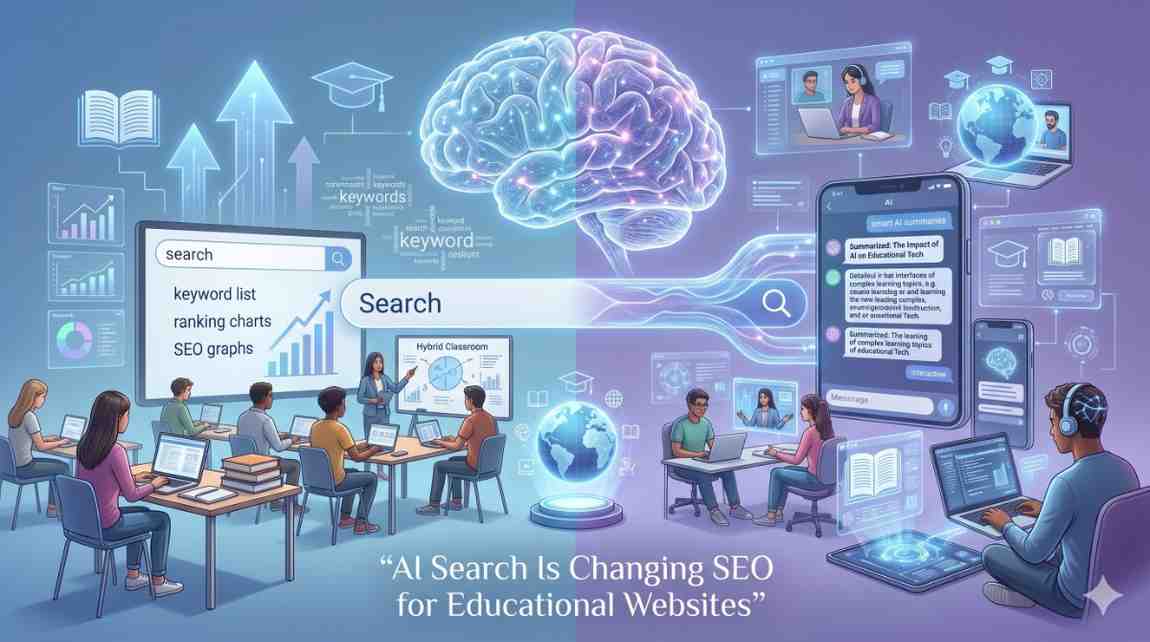
Search engine optimization has entered a completely new phase. For years, educational websites relied heavily on traditional SEO tactics such as keyword density, backlink quantity, and ranking positions to attract organic traffic. While those factors still matter, the rise of AI-powered search experiences is rapidly changing how users discover information online.
Search engines are becoming more conversational, predictive, and intent-focused. Instead of simply displaying a list of links, AI-driven systems now generate summaries, answer questions directly, and prioritize content that demonstrates expertise and usefulness. This shift is forcing educational websites to rethink how they create, structure, and optimize content.
Institutions that continue relying on outdated SEO practices may gradually lose visibility, while those that adapt to AI-driven search behavior can strengthen their authority and reach wider audiences.
Table of Contents
Search Behavior Is Becoming More Human
One of the biggest changes in modern SEO is the way people search.
Traditional search queries were usually short and keyword-focused:
- “digital marketing course”
- “SEO tips”
- “video editing career”
Today, users interact with search engines more conversationally. They ask complete questions such as:
- “What digital skills are worth learning in 2026?”
- “How can students improve communication skills for interviews?”
- “Is AI replacing traditional SEO strategies?”
- “Which marketing skills are most important for beginners?”
AI-powered search systems are designed to understand context, user intent, and meaning rather than relying only on exact-match keywords.
This means educational websites must shift their focus from keyword stuffing to intent-driven content creation. Articles should answer real questions clearly, naturally, and comprehensively.
The websites performing best in AI-assisted search environments are often the ones that explain concepts in simple language while providing useful insights readers can apply immediately.
Why Topical Authority Matters More Than Rankings
Many websites still publish random blog posts targeting disconnected keywords. While this approach may generate occasional traffic, it rarely builds long-term authority.
AI-powered search systems increasingly evaluate whether a website demonstrates consistent expertise within a subject area. This concept is often referred to as topical authority.
For educational websites, this means creating clusters of related content around a specific niche instead of isolated articles.
For example, an educational website focused on digital marketing could publish connected content around:
- SEO fundamentals
- AI visibility
- content marketing
- YouTube growth strategies
- Google Ads
- branding
- career guidance
- communication skills
- freelancing opportunities
When search engines repeatedly associate a website with useful information on a subject, the site becomes more trustworthy in both traditional rankings and AI-generated responses.
Educational brands that consistently publish high-quality, experience-based content are more likely to appear in AI Overviews and conversational search experiences.
The Rise of Zero-Click Searches
Another major shift affecting SEO is the growth of zero-click searches.
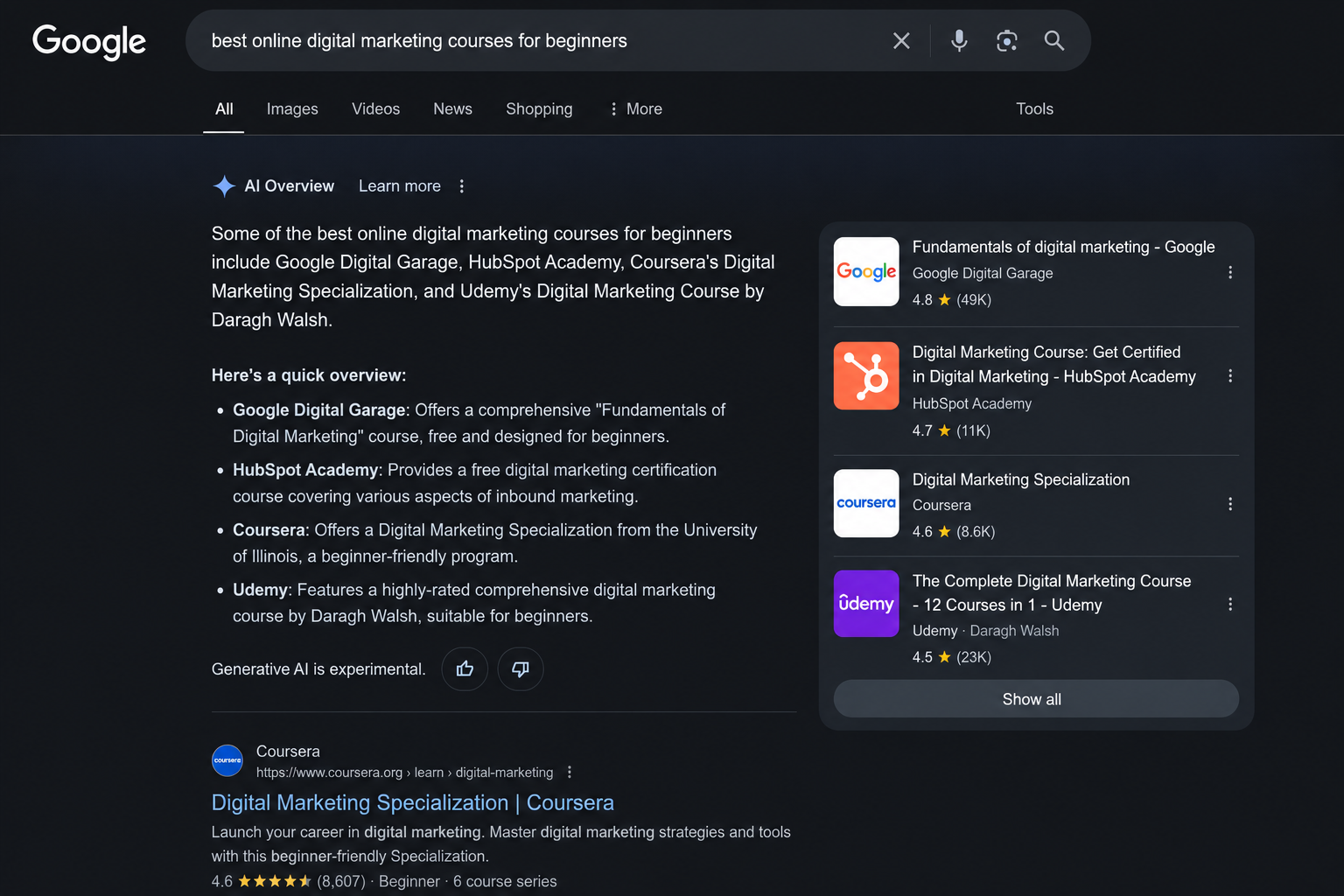
In many cases, users now receive direct answers from search engines without clicking a website link. AI-generated summaries, featured snippets, and knowledge panels often provide quick information immediately within search results.
For educational websites, this can seem alarming because fewer clicks may lead to lower traffic numbers. However, visibility still matters.
Being referenced in AI summaries helps establish credibility and brand recognition. Educational institutions that consistently publish reliable and structured information increase their chances of becoming trusted sources for AI-generated responses.
The goal is no longer just generating clicks. Modern SEO is increasingly about becoming a recognized authority within your niche.
Helpful Content Outperforms Promotional Content
One of the most important changes in modern search algorithms is the growing emphasis on genuinely helpful content.
Educational websites often make the mistake of turning every article into a promotional page. Overusing phrases such as “best institute,” “top course,” or “guaranteed success” can reduce trust and make content appear sales-driven.
AI systems are becoming increasingly effective at identifying whether content is educational or purely promotional.
Readers also respond more positively to practical guidance than to aggressive marketing language.
For example, an article explaining:
- How students can improve their communication skills,
- How beginners can start learning SEO,
- Or how AI tools are changing content marketing
will usually build more credibility than a page focused entirely on selling a course.
Ironically, educational content that teaches effectively often generates stronger brand trust and better conversions over time because users begin viewing the institution as a reliable source of expertise.
User Experience Is Now a Core SEO Factor
SEO is no longer limited to keywords and backlinks. User experience has become a critical ranking factor.
Search engines increasingly evaluate how users interact with content. If visitors quickly leave a page because it is difficult to read or poorly structured, visibility may decline over time.
Educational websites should prioritize:
- fast loading speed,
- mobile responsiveness,
- easy navigation,
- readable formatting,
- and accessible language.
Most students now consume content on smartphones. Long paragraphs, cluttered layouts, and complicated jargon can significantly reduce engagement.
Instead, content should include:
- descriptive headings,
- bullet points,
- short paragraphs,
- practical examples,
- and clear takeaways.
The easier information is to consume, the better the user experience and the stronger the long-term SEO performance.
Conversational Content Is Becoming More Valuable
AI search engines are trained on natural language patterns. As a result, conversational and human-centered content is becoming more valuable than robotic SEO writing.
Many older SEO strategies encouraged writers to repeat exact keywords unnaturally throughout an article. Today, that approach often reduces readability and trust.
Modern educational content performs better when it sounds authentic and informative.
Instead of writing:
“Best SEO course for SEO beginners who want SEO training,”
Effective content explains:
- what users need,
- Why it matters,
- and how they can apply the information.
Natural writing improves user engagement and helps search systems better understand the context of the content.
The Importance of EEAT in Educational SEO
Google has increasingly emphasized EEAT:
- Experience
- Expertise
- Authoritativeness
- Trustworthiness
These principles are especially important for educational websites because students rely on online information to make important learning and career decisions.
Educational institutions can strengthen EEAT by:
- publishing expert-led content,
- using credible authors,
- citing reliable sources,
- updating outdated information,
- and maintaining transparency.
Articles based on real-world experience often perform better than generic content rewritten from other websites.
Adding practical examples, original insights, and industry observations can significantly improve credibility.
Structured Content Improves AI Visibility
AI systems prefer content that is organized clearly and logically.
Educational websites can improve visibility by:
- using structured headings,
- answering questions directly,
- adding FAQs,
- implementing schema markup,
- and organizing topics systematically.
For example, headings such as:
- “How AI Is Changing SEO”
- “Benefits of Structured Content”
- “Why User Intent Matters”
are more effective than vague or overly creative headings that provide little context.
Structured content helps both users and AI systems quickly identify the purpose and relevance of information.
Why Educational Websites Must Adapt Quickly
AI-assisted search is not a temporary trend. It represents a long-term transformation in how users interact with information online.
Educational websites that adapt early can build stronger visibility, authority, and audience trust. Those relying entirely on outdated SEO tactics may struggle to remain competitive.
The future of SEO will likely focus less on manipulating algorithms and more on creating genuinely useful digital experiences.
This means educational brands should prioritize:
- quality over quantity,
- expertise over keyword repetition,
- and user value over aggressive promotion.
The institutions that succeed in the coming years will not necessarily be the ones publishing the most content, but the ones creating the most meaningful and trustworthy content.
Conclusion
AI-powered search is fundamentally reshaping SEO for educational websites. Rankings alone are no longer the only measure of visibility. Search engines are increasingly rewarding websites that demonstrate expertise, relevance, clarity, and trustworthiness.
Educational institutions must now think beyond traditional optimization tactics and focus on building genuine authority through useful, experience-driven content.
By understanding user intent, improving content structure, prioritizing user experience, and publishing educational resources that truly help readers, institutions can strengthen their visibility in both traditional search results and AI-generated search experiences.
As search technology continues evolving, one principle remains constant: websites that consistently provide value will continue to earn attention, trust, and long-term growth.

Bodh Raj is a Digital Marketing Manager with around 5 years of experience in SEO, content marketing, Meta Ads, Google Ads, and digital growth strategies. He has worked on website optimization, content planning, lead generation, and online marketing campaigns across different industries, helping businesses improve their digital presence and organic visibility.