Most businesses notice SEO problems too late.
They usually check rankings, traffic, and clicks after performance has already dropped. By then, the real issue may have been building quietly for days, weeks, or even months.
A page may have disappeared from the index. A redirect may have broken. A landing page may have slowed down. A form may have stopped working. Visitors may still be arriving, but fewer of them may be taking action.
This is why SEO reporting needs to move beyond simple ranking updates.
Rankings and traffic still matter. But they do not show the full picture. A useful SEO analytics process should help marketers spot problems before organic visibility, leads, and revenue decline.
For marketers, learners, and professionals, the goal is simple: track the signals that explain why SEO performance changes, not just the numbers that show it changed.
Table of Contents
Why Rankings Are Not Enough
Keyword rankings are useful because they show where your pages appear in search results. But rankings alone do not prove that SEO is working.
A page can rank and still attract the wrong audience. A blog post can gain traffic but produce no leads. A website can show steady organic sessions while important service pages lose visibility.
This creates a gap between SEO activity and business results.
Traditional SEO reports often focus on impressions, clicks, ranking movement, and total traffic. These numbers are helpful, but they do not always answer the most important question: is organic search helping the business grow?
A better SEO report connects visibility with user intent, engagement, and conversions. It shows whether people are finding the right pages, interacting with the content, and moving closer to action.
This is why understanding how SEO supports traffic and business growth is more valuable than tracking rankings in isolation.
SEO should not only show where a website appears. It should show whether search visibility is bringing the right people to the right pages.
Start With Indexing
Before a page can rank, search engines need to discover, crawl, and index it.
Google explains that crawling and indexing are the processes that allow web pages to become eligible for search results. If a page is not indexed, it cannot appear in Google Search, no matter how useful the content may be.
This makes indexing one of the first SEO signals marketers should monitor.
Many businesses publish new pages and assume search engines will automatically find them. Sometimes they do. But indexing is not guaranteed.
Thin content, duplicate pages, poor internal linking, blocked resources, crawl issues, and incorrect canonical tags can all affect whether a page appears in search results.
This matters most for websites that publish often. Service pages, product pages, location pages, and blog posts all need to be discoverable if they are expected to generate traffic.
A practical SEO analytics process should help teams see whether key pages are indexed, whether new pages are discovered quickly, and whether important URLs drop out of search results.
This is especially important in competitive industries.
When competitors seem to rank faster, the issue is not always better writing or more backlinks. Sometimes their pages are simply easier for search engines to discover, crawl, and index. Understanding why competitors rank faster can help marketers treat indexing as a core SEO metric rather than a technical afterthought.
Monitor Technical Health Continuously
Technical SEO should not be treated as a one-time audit.
Websites change constantly. New pages are added. Plugins are updated. Tracking scripts are installed. Redirects are changed. Forms are edited. Design updates go live.
Any of these changes can create problems that affect SEO performance.
A page may load slowly. A redirect may point to the wrong URL. Internal links may break. A form may fail. A page may become unavailable for users or search engines.
The problem is that many of these issues do not appear immediately in standard analytics reports.
By the time traffic drops, the technical issue may have already affected crawling, indexing, engagement, or conversions.
This is why marketers should connect technical SEO with analytics.
A strong SEO dashboard should help teams see whether important pages are available, load properly, allow users to complete key actions, and are accessible to search engines.
Technical clarity also helps search engines understand a website more easily. A broader understanding of SEO and digital marketing can help marketers see how site structure, content, analytics, and user experience work together.
Website monitoring also plays a key role. When teams understand how website monitoring tools work, they can detect problems faster and protect organic performance before small issues become larger ones.
Measure Traffic Quality
More traffic does not always mean better SEO.
A page can attract many visitors who leave quickly, never visit a service page, and never take action. At the same time, a smaller number of qualified visitors can create better results if they engage with the content and convert.
This is why marketers should measure traffic quality, not just traffic volume.
Traffic quality looks at what visitors do after they arrive. Do they read the page? Do they scroll? Do they visit another page? Do they return later? Do they submit a form, call, book, buy, or subscribe?
These signals help marketers understand whether the traffic is useful.
For example, a blog article might bring many top-of-funnel visitors. That can be valuable if the article introduces the brand and guides readers to relevant next steps. But if the article has no internal links, no clear journey, and no connection to business goals, the traffic may not lead anywhere.
The same applies to local and service-based businesses.
A business does not simply need more visitors. It needs visitors with the right intent. Someone searching for a nearby service with a clear need is usually more valuable than someone reading a broad informational article with no plan to act.
This is why local SEO and marketing strategy should connect visibility with user intent, engagement, and lead actions.
A useful exercise is to review your top organic landing pages and ask one question for each page: What should the visitor do next?
If the answer is unclear, the page may need better internal links, stronger calls to action, clearer messaging, or more trust signals.
Connect SEO With Conversions
SEO should not stop at traffic.
The real value of SEO comes from what visitors do after they land on the website. A conversion could be a form submission, a phone call, a product purchase, a quote request, a demo booking, a newsletter signup, or an appointment.
If these actions are not tracked, the SEO report is incomplete.
Many businesses know how many organic visitors they receive. But they do not know which pages generate leads. They know which keywords improved, but they do not know whether those improvements created business opportunities.
This creates a serious reporting blind spot.
A better SEO analytics process connects organic search with conversion tracking. Each important landing page should have a purpose. Informational content should lead readers toward helpful next steps. Service pages should make it easy to inquire. Product pages should reduce hesitation. Contact pages should be simple to use.
Analytics should show where users move forward and where they drop off.
For e-commerce websites, this connection is even more important. SEO should not only bring people to product and category pages. It should help teams understand which organic visits lead to purchases, which pages create friction, and which search queries attract buyers.
This is why businesses should treat digital marketing, SEO, and web analytics as interconnected parts of a single growth system.
Even detailed dashboards can miss context. Looking for analytics blind spots helps marketers ask better questions about user behavior, page performance, and conversion paths.
Build a Dashboard That Supports Decisions
A good SEO dashboard should not overwhelm people with charts.
It should help teams make decisions.
Instead of showing every available metric, the dashboard should connect the most important signals. These include indexing visibility, technical health, traffic quality, user engagement, conversion movement, and website monitoring alerts.
When these signals appear together, SEO becomes easier to manage.
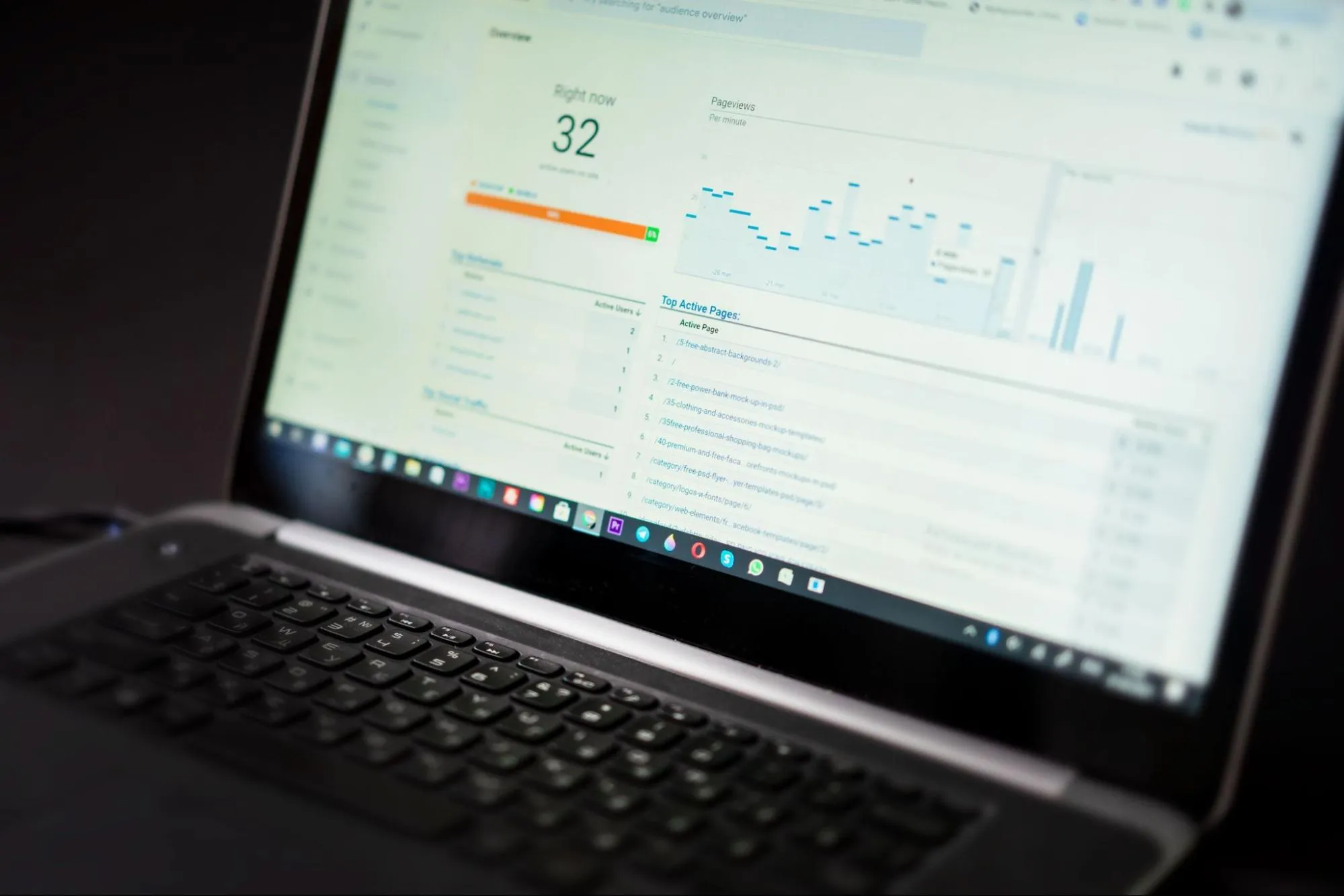
A team can see whether new pages are indexed, whether key pages are receiving traffic, whether users are engaging, whether technical problems are affecting performance, and whether organic visitors are converting.
This helps marketers avoid panic when rankings move.
Search performance can change after algorithm updates, site changes, competitor activity, or shifts in user behavior. Businesses that understand the role of SEO in driving traffic can review changes more calmly and focus on the signals that matter.
A strong dashboard should also reduce vanity reporting.
It should help teams move away from numbers that look impressive but do not support action. When teams understand what to track instead of useless SEO reports, they can focus on metrics that reveal real problems and opportunities.
Choosing the right analytics setup also matters. Marketers comparing web analytics tools for digital marketing or exploring free web analytics tools should choose tools based on their goals, budget, and technical needs.
Use Real-Time Monitoring
Monthly reports are useful, but they are not always fast enough.
If a key landing page breaks today, discovering it at the end of the month may cost traffic and leads. If a redirect fails, a form stops working, or a page becomes unavailable, the business needs to know quickly.
Real-time monitoring helps close this gap.
It gives teams a chance to catch problems early, fix them quickly, and prevent small issues from becoming larger SEO problems.
This matters for agencies managing multiple websites, ecommerce brands with frequent updates, and service businesses that depend on organic inquiries.
For local businesses, timing is especially important. Searchers often act quickly. They compare options, check trust signals, and contact the business that is easiest to reach.
If a website is unavailable, slow, or difficult to use at that moment, the lead may go elsewhere.
This is why local SEO and digital marketing training should be supported by analytics that connect visibility, engagement, and lead actions.
As websites grow, manual checking becomes less reliable. A practical website monitoring tool agency workflow can help teams manage many pages, alerts, and technical risks without losing control.
Monitoring is not separate from SEO. It is part of protecting organic performance.
A Simple Framework for Better SEO Reporting
Marketers can make SEO reports more useful by organizing them around five questions.
First, can search engines discover and index the most important pages?
Second, is the website technically healthy and accessible?
Third, is organic traffic coming from the right audience?
Fourth, are visitors engaging with the content and moving deeper into the site?
Fifth, are organic visitors taking meaningful actions?
These questions keep SEO reporting focused on business performance rather than surface-level numbers.
They also make reports easier for non-technical stakeholders to understand. Instead of showing a long list of disconnected metrics, marketers can explain what is working, what is at risk, and what needs to happen next.
Final Thoughts
SEO analytics should not be limited to rankings and traffic.
Those numbers still matter, but they are only part of the picture. A business that wants steady organic growth needs to understand whether its pages are indexed, whether the website is technically healthy, whether traffic is qualified, whether visitors are engaged, and whether organic visits are turning into real business outcomes.
The best SEO analytics process connects search visibility with business performance.
It helps teams identify problems earlier, improve content with better data, monitor website health, and make smarter decisions about where to invest next.
For businesses that want a stronger foundation, a connected approach to SEO, digital marketing, analytics, and content strategy can support more reliable long-term growth.
In the end, better SEO analytics is not about collecting more data. It is about knowing which data matters, acting on it faster, and using organic search to create measurable business growth.

Vandana is a Content Writer and Digital Marketing Executive with 1+ years of experience in SEO content writing, website content, and digital marketing. She specialises in creating engaging, SEO-friendly content, keyword research, and content planning to help brands improve their online presence and audience reach.