
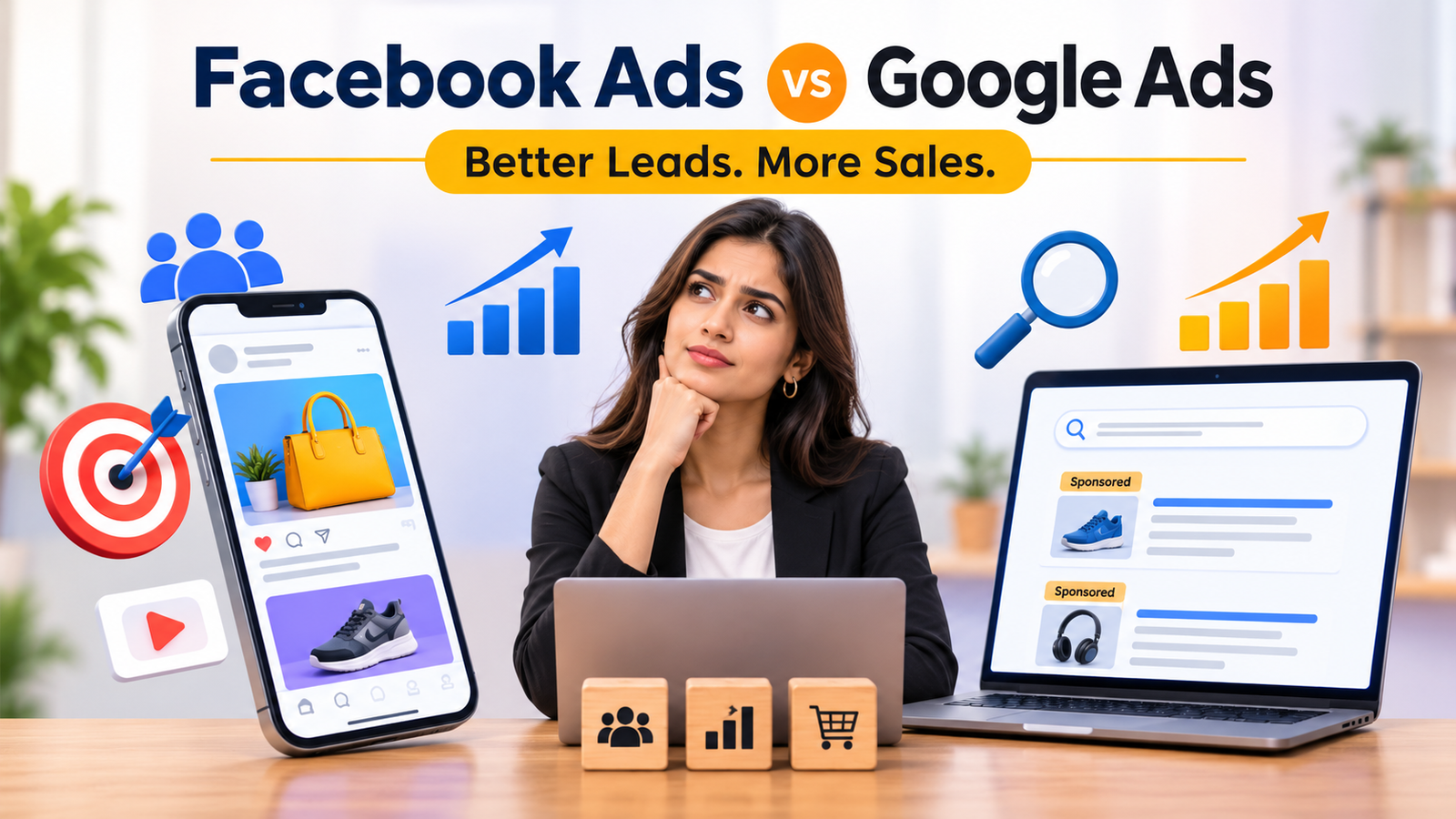
Facebook Ads vs. Google Ads: Where Should You Invest for Better Leads and Sales
All businesses desire more customers, more regular enquiries, and improved sales. There are a number of advertising channels that can be used, and Facebook and Google are two popular ones. Whilst both Facebook and Google can assist in a business’s digital marketing, they do so in differing ways. Facebook Ads enable brands to tailor advertisements to suit people’s interests and how they behave whilst online. Google Ads can effectively identify people actively searching for a particular product or service. By analysing these two advertising channels, a business can then assess where best to spend money to effectively market itself and target consumers. Facebook Ads Facebook Ads are set up via Meta Ads Manager. Brands can then utilise them to advertise on Facebook, Instagram, Facebook Messenger, and other accepted sites. One of the key features of Facebook advertising is its ability to effectively target consumers. Businesses can tailor advertising based on factors such as a person’s age, geographic area, and behaviour, as well as their interests. For example, a fashion retailer can specifically advertise a new range to those with an interest in fashion. Moreover, a real estate organisation could target house-related projects at property owners in defined geographic areas. Alongside images, video, carousel, lead form, story and reels, Facebook offers a wide range of advertising options. These can be used by a business to showcase and advertise goods and services and also collect enquiries. Google Ads Google Ads is another digital advertising mechanism that allows brands to add sponsored adverts to Google Search, YouTube and allied websites and apps. A major advantage of this method is that it can specifically target consumers who are already searching for a product, service or information. A person may search for ‘best digital marketing course near me’. Those who are searching for digital marketing-related courses may therefore see advertising for digital marketing training organisations. Google Ads can be of a number of different types; namely, Search, Display, Video, Shopping and Performance Max. Businesses can use these to drive web traffic, advertise, and obtain new customers. Key Differences Between Facebook and Google Advertising Online ads are also supported by both platforms, but they reach customers in different ways. Facebook Ads target interests and behaviours of their audience, and Google Ads target search intent very strongly. Comparison Factor Facebook Ads Google Ads Main Purpose Brand awareness and engagement Reaching people searching for products or services Targeting Interests, age, location, and behaviour Keywords, location, and audience signals Customer Intent Reaches people who may develop an interest Reaches people actively searching Ad Formats Images, videos, carousels, Stories, and Reels Search, Display, Shopping, and Video Ads Best For Product discovery and lead generation Search traffic and sales Cost Model CPC and CPM bidding CPC and other bidding strategies The main difference is how customers discover a business. Facebook Ads introduce products to relevant audiences, while Google Ads help businesses appear when people search for something specific. Facebook and Google Advertising Pricing As with all advertising, pricing is determined by multiple factors, such as the level of competition within an industry, target market, and advertising aims. Neither Facebook nor Google offer a standardised price for advertising. On Facebook, advertising prices will be affected by factors including consumer competition, levels of engagement, and marketing aims. Businesses can then begin to market themselves at an initial budget level and modify expenditure in line with results. A beauty salon could use Facebook and Instagram advertising to advertise holiday Specials. Customers from the surrounding geographical area can then be encouraged to book an appointment. Regarding Google advertising, pricing is influenced by competition, bidding processes, and the relevance of advertising. Should a company wish to strive to be at the top of the search engine results page for highly sought-after search terms, it may have to commit further funds in order to do so. Whilst considering which advertising channel to utilise, it is vital that a business analyses which platform provides the most value for money. This is despite what appears to be the lower cost of clicks, and focuses on obtaining high-quality leads and/or actual customers. Which Advertising Channel is Best For Leads and Sales? Clicks do not always result in customers. Crucially, the success of a business’ advertising is often reflected in how many people perform a key action in response to advertising. Businesses can successfully use enticing promotions and video content alongside convenient lead form facilities to effectively obtain leads via Facebook Ads. This marketing channel is suitable for a wide range of industries, for example, real estate, educational institutions, beauty salons, and event organisers. Likewise, real estate businesses can use Facebook video adverts to showcase housing projects and obtain queries from those eager to buy property. Google Ads can specifically target consumers who are already searching for particular goods or services. For example, someone may click on a search for ‘website development company in Chandigarh’ and may already be motivated to locate a relevant service. Although both advertising channels can be used to collect leads, businesses must ensure that they effectively analyse the quality of leads obtained, that landing pages are appropriate for the advertising content, and that there is a prompt response to leads. When Should a Business Utilise Facebook Advertising? Facebook advertising can be a valuable option for a business aiming to engage with new people regarding the goods or services it provides. It is especially appropriate for sectors that place emphasis on visual elements, promotions, and interaction. Facebook advertising is suitable for a business to utilise during the launch of new goods, in relation to seasonal sales, and for brand awareness. It can also be used to target specific groups of people, based on their interests and geography. For example, an interior design enterprise can showcase various interior design designs and styles in picture and video format. Consumers with an interest in interior design can then visit the business’ website and submit an enquiry. When Should a Business Employ Google Advertising? Google advertising can be especially pertinent
Facebook Ads vs. Google Ads: Where Should You Invest for Better Leads and Sales Read More »