Web Designing Training

Digital Marketing Course in Zirakpur

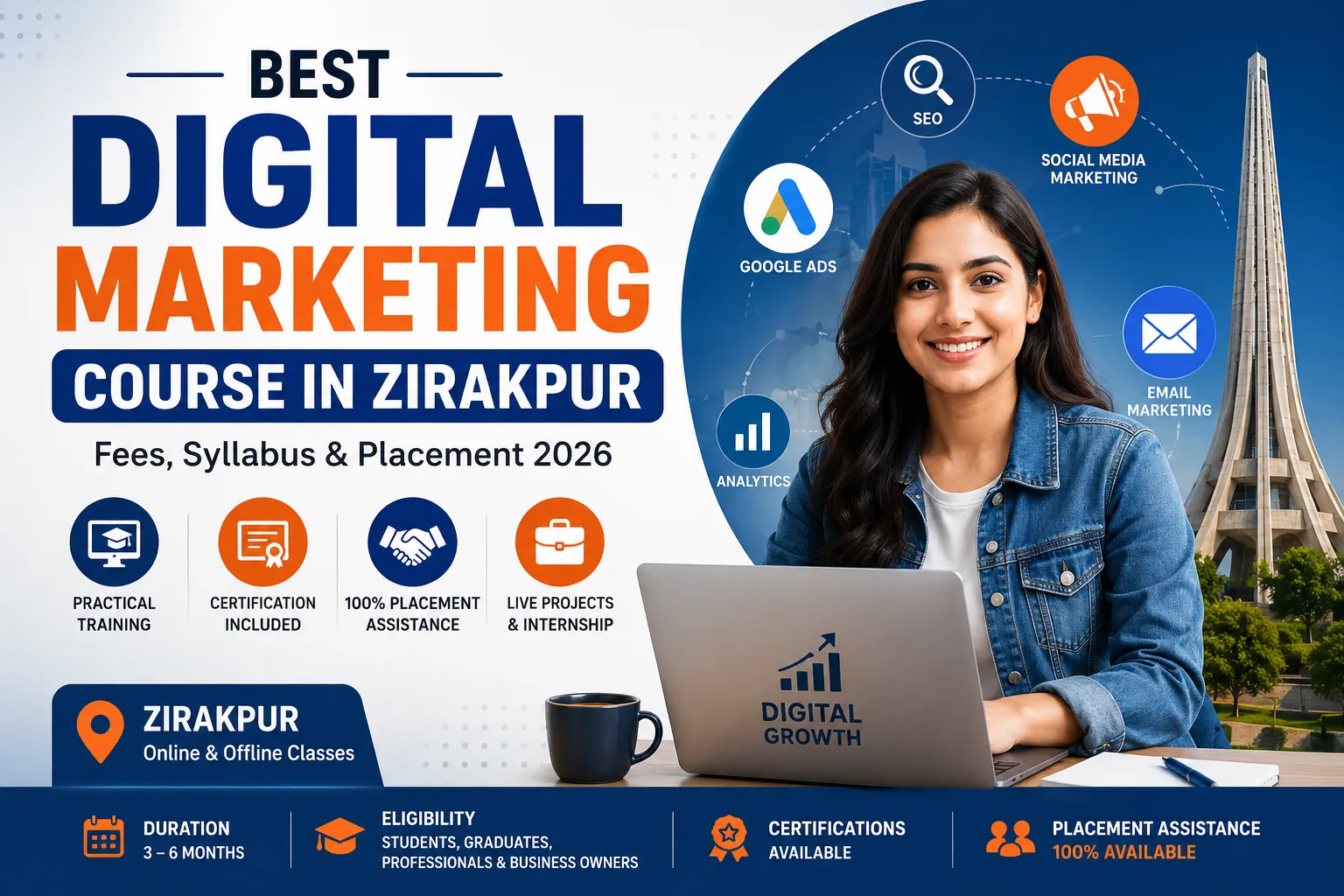
Best Digital Marketing Course in Zirakpur: Fees, Syllabus & Placement 2026

At the present time, nearly every business is concentrating on online Progress; the need for Internet Marketing has risen drastically. Online Marketing has become a useful skill that can be beneficial for both careers and brands. While selecting the best Internet Marketing course, there are various factors that need to be taken into account, such as course fees, Learning Modules, placement, etc.  Access Our Digital Marketing Course in Zirakpur? The need for digital marketing is expanding quickly in India. The demand for trained professionals is also rising. By observing this problem, we are offering a digital marketing course in Zirakpur. By learning Internet Marketing, they can be prepared to meet new demands and take advantage of new job Career paths in the market. Some reasons to choose this course: Digital Marketing Course Overview Digimaniac Course Details Information Course Name  Digital Marketing Course  Location  Zirakpur  Course Duration  3–6 Months  Learning Mode  Online & Offline  Eligibility  Students, Graduates, Professionals & Business Owners  Training Type  Practical & Live Project-Based  Certifications  Available  Internship Support  Available  Placement Assistance  100 PERCENT PLACEMENT Available  Key Modules  SEO, Google Ads, Social Media Marketing, Content Marketing, Email Marketing, Analytics  Job Opportunities  SEO Executive, PPC Specialist, Social Media Executive, Digital Marketing Executive  Course Fee  Depends on the Season & Course Level  Digital Marketing Course Syllabus 2026 A good Internet Training Program is greatly influenced by its course structure. Clear learning modules help students learn in a structured manner and understand concepts step by step. This helps learners build a stronger understanding of key digital marketing concepts.    Search Engine Optimisation (SEO) In the digital age, people search for information using Online search systems. It is important for any online site to have an online presence for this reason. It is one of the key components. It enhances the visibility of a website and attracts the target audience. SEO can help get more organic visitors to the online platform. and boost its ranking on Internet search tools.   Comparison Between Types of SEO Factor  On-Page SEO  Off-Page SEO  Technical SEO  Local SEO  Focus  Content Optimization  Authority Building  Technical Performance  Local Visibility  Main Goal  Better Rankings  Higher Trust  Improved Website Health  More Local Customers  Traffic Type  Organic Traffic  Referral Traffic  Organic Traffic  Local Traffic  Key Element  Keywords & Content  Backlinks  Site Speed & Indexing  Google Business Profile  Best For  Content-Based Websites  Brand Building  Website Optimization  Local Businesses  Performance Marketing The goal of any business is to meet the needs of more customers with its services and products within a short period. In this context, Google Ads emerges as an effective option. It is useful for organisations to target an audience and to market their products more efficiently. This can help boost online visibility and engagement. Data-driven marketing also helps brands monitor outcomes by measuring conversions and improve marketing strategies for enhanced performance.  Google Ads and Meta Ads both have an important role in Performance Marketing. But there are some differences between the two platforms in audience targeting and ad format. Below is a comparison of the major differences between the two Popular PPC Platforms. Factor  Google Ads  Meta Ads  Platform  Google Search, YouTube, Display Network  Facebook, Instagram, Messenger  Audience Intent  Users actively search for products ya services  Users browse social media while watching ads dekhte hain  Targeting Method  Keywords and search intent-based  Interests, behaviour, and demographics are based  Best For  Lead generation, website traffic, and sales  Brand awareness, engagement, and audience building  Ad Formats  Search Ads, Display Ads, Shopping Ads, Video Ads  Image Ads, Video Ads, Carousel Ads, Story Ads  Customer Journey Stage  Targets high-intent audiences. New audience discover aur engage karne mein help karta hai  Conversion Potential  Generally higher because users are already searching  Strong for awareness and remarketing campaigns  Cost Structure  Mostly Pay-Per-Click (PPC) model  CPC, CPM, and other bidding models  Main Advantage  High-quality leads and purchase intent  Detailed audience targeting and engagement  Ideal Businesses  Service providers, eCommerce, and local businesses  Brands, startups, e-commerce, and content creators  Social Media Marketing In today’s world, online channels have become a main part of people’s daily lives. As a result, companies are also using social media to reach out to their target audience. This allows brands to improve their visibility, build good customer relationships, and increase engagement. This increases awareness of their products and services among more people.  Social Media Marketing Tools  Content Marketing Quality content is a crucial component of This Industry that helps a brand achieve online success. Content planning plays a vital role in this process, as it helps determine what type of content will be useful to the audience. Through blog writing, businesses share their knowledge and build trust with people.  Popular Content Marketing Tools  Email Marketing This is a powerful online marketing strategy that allows businesses to communicate directly with their consumers. Through this method, companies send useful information to their audience. It boosts engagement and builds strong relationships. It improves users’ loyalty, increases conversions, and contributes to overall business Improvement. Google Analytics It is an advanced web analytics tool that helps Companies track website traffic and user behaviour.  This tool allows businesses to detect user origin, create engagement with content, and determine the best pages. Successful utilisation of this data can provide benefits in terms of enhancing marketing strategies and enabling business development. AI Tools and Marketing Automation AI tools have become an integral part of This Industry; consequently, AI-based marketing tools are now being taught in modern courses. They are used to optimise campaigns and manage tasks such as keyword research and data analysis. These Utilities automate repetitive work, save time, and simplify various processes for businesses. Placement Chances After Completing a Digital Marketing Course Completing an Advanced Online Marketing Course opens up numerous career opportunities for students. After finishing the course, they can choose their career option, like SEO, SMM, or Content Marketing, with their acquired Abilities. Plus, they can also apply for positions such as SEO Specialist, Social Media Executive, Content Marketer, and PPC Specialist. SEO Executive Their main focus is on enhancing website ranking

Best Digital Marketing Course in Zirakpur: Fees, Syllabus & Placement 2026 Read More »

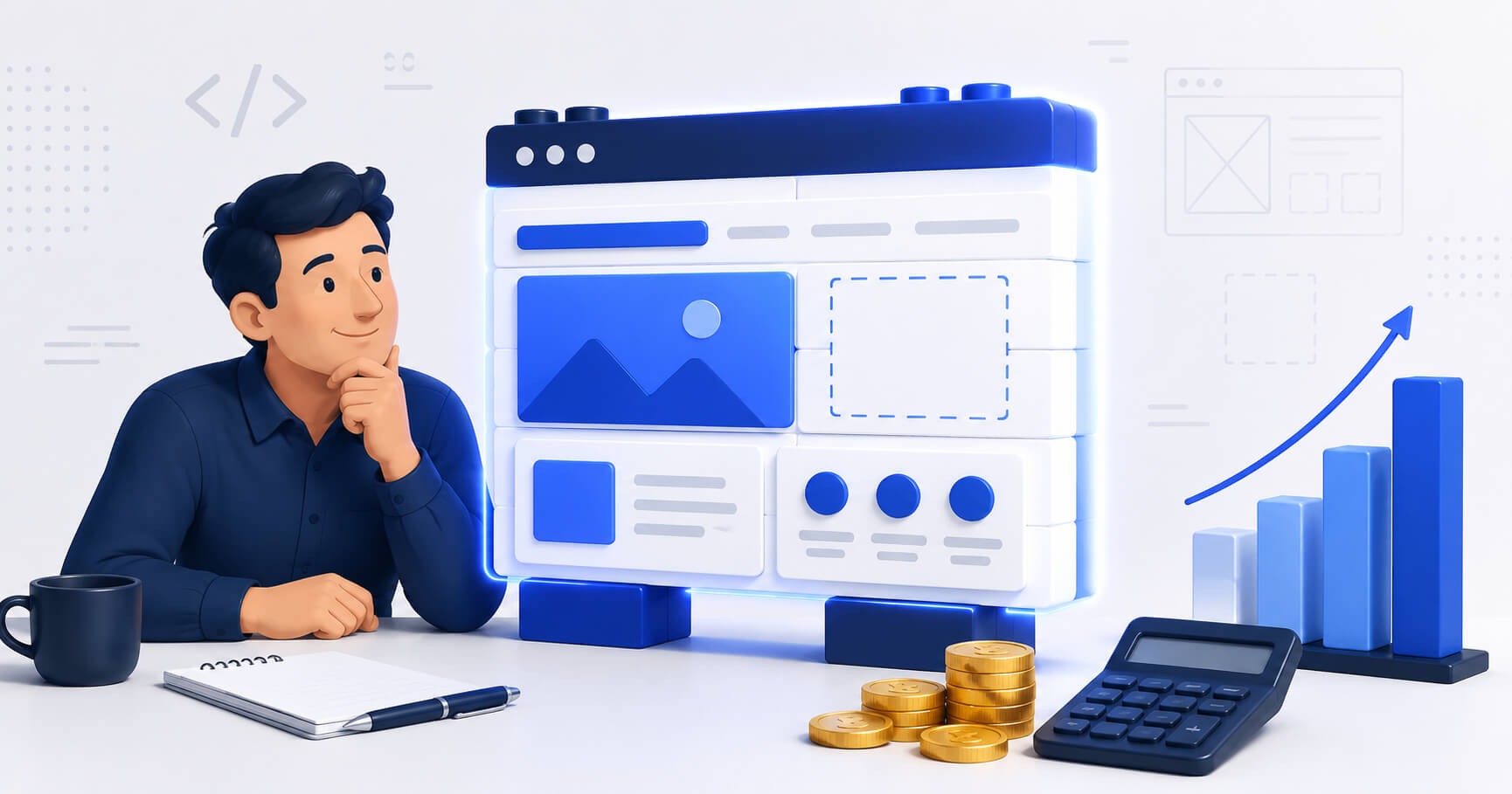
Beyond Templates: How AI Builders Can Generate Truly Unique Design Systems

Beyond Templates: How AI Builders Can Generate Truly Unique Design Systems

AI website builders in India (and similar AI tools) have developed immensely within the last decade. These products started as mere website-building tools that allowed users to create their websites using pre-designed templates. Today’s AI site builders offer features such as automatically generating website layouts, colors, typography, and the user’s path through the website. With such high-end tools, users can easily create their online presence even with top hosting for WooCommerce. However, despite these advances, there remains one major critique of many AI-built websites: most look and feel similar. Templates limit creativity This happens because AI itself is not a problem; it’s the way it is being used when implementing a design. True design differentiation doesn’t come from simply rearranging existing template designs at lightning speed; rather, it lies in design system creation that originally represents a brand’s essence. It includes its goals and the expectations of its users. While templates can streamline the process of website creation, they have limited options. Templates have a fixed number of design components; therefore, even with hundreds of templates available, they follow just four common design styles—leading to three key downsides. 1. Visual convergence: Websites built on templates often have strong similarities to other sites built using a similar template type, mainly in the SaaS, eCommerce, and portfolio categories. 2. Brand mismatch: Templates were created with the intent of appealing to the broad audience, not to meet an individual brand’s voice, emotional tone, and cultural context. 3. Scalability Problems: As a website grows, it struggles with scalability when using templates. New pages, features, and content can cause the website to lose visual consistency. What makes a design system unique? A design system doesn’t consist simply of a color palette or font set. It’s an evolving structure defining how a brand interacts with users through visual and functional means. A truly unique design system should contain: To create unique design systems using AI builders, you need to change the focus from design output to design reasoning. From visual generation to design intelligence Currently, most AI builders concentrate on what a website will look like. However, the future lies in understanding the reason for those visual outcomes. When generating unique design systems, the AI must analyze the input data beyond simply basic prompts like “minimal” or “modern.” Instead, advanced AI builders like MilesWeb have started to include: With the ability to interpret these signals, AI can produce systems that feel more designed, or organic, rather than just assembled. Generated design rules The best AI-design systems create a shift toward design rule generation, rather than fixed layouts. For example, rather than saying “This is your homepage layout,” AI systems define rules such as As a result of this approach, the website grows organically over time from a visual perspective while still providing a sense of consistency. Essentially, the resulting system feels as though it was produced by a real, lived-in process, even though it was created through the machine. AI design evolution An important difference between traditional templates and the way AI designs grow is through feedback-driven evolution. The use of ethical and responsible data usage can be beneficial for AI developers since users’ interaction with the AI will be based upon a user’s actual experiences as opposed to an AI designer’s assumptions. Constraints in creative AI design Ironically, unlimited freedom doesn’t lead to unique designs. Instead, strong limitations help define what a unique design is. AI builders develop clear boundaries defined by accessibility standards, best design practices, and principles of usability—”within these boundaries, creativity flourishes.” Traditional design templates have one fixed view of the user experience, whereas an AI design system is always evolving and improving by observing the various ways users interact with their designs. By integrating limitation structures, AI can create a design system based on real-world user experience and provide a method for differentiating a meaningful design from a novel design. Effects on businesses and creators The reduction of reliance on rigid design templates and the use of AI-generated designs can result in considerable savings (for both businesses and consumers) by reducing the time required for both parties to utilize AI-based design systems. For creators and developers, the AI systems provide intelligent counterparts rather than replacements; therefore, projects created by AI can serve as a cohesive foundation. With this, creators can develop, refine, and direct the design path of their work using the AI-generated materials. Most importantly, users of the final products feel that the projects are intentional, branded, and human, even if they were created by an AI tool. Looking ahead The future of AI website builders is no longer simply about creating new designs but also about building new systems. Once an AI understands how to interpret a company’s brand, how users behave, and how the technical aspects of design work, an AI doesn’t just act as an expedient way to quickly build a website but also as a strategic partner. A website that is created using this methodology won’t be labeled as an “AI” website; it will just be a well-designed website. Akshit RanaAkshit Rana is the Co-Founder of Digimaniac and a performance marketing professional with around 7 years of experience in digital advertising and growth strategies. He specializes in performance marketing, paid campaigns, and helping businesses improve online visibility and lead generation.

Beyond Templates: How AI Builders Can Generate Truly Unique Design Systems Read More »